API is a software intermediary that allows two applications to talk to each other. Unlike user interface, which connects a computer to person, an API connects computers or pieces of software to each other. One purpose of APIs is to hide the internal details of how a system works, exposing only those parts a programmer will find useful and keeping them consistent even if the internal details later change.
For this week, I tried to understand
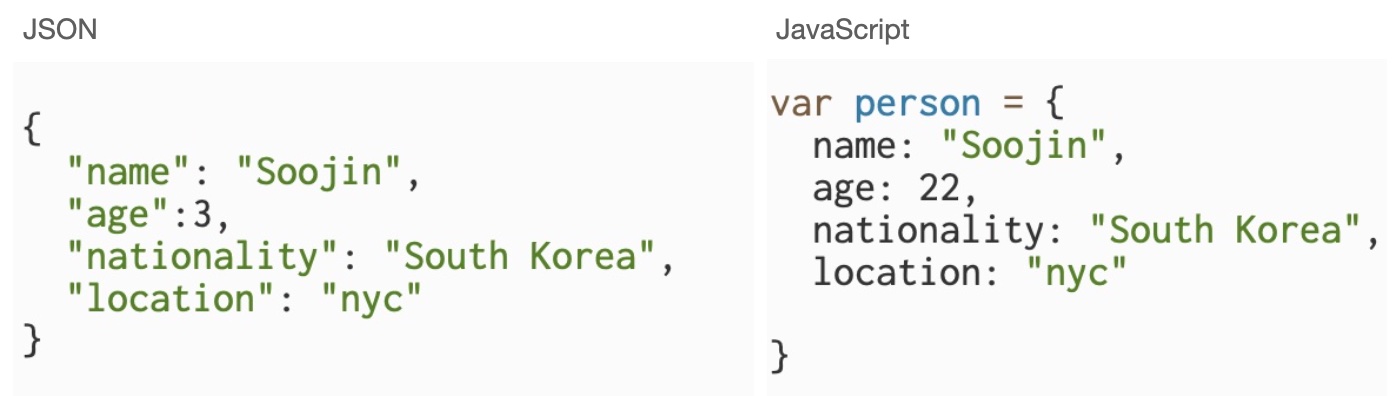
JSON (JavaScript Object Notation) is an open standard file format and data interchange format that uses human-readable text to store and transmit data objects consisting of attribute-value pairs and arrays .
Following the video tutorial
Loading JSON data from a URL by Daniel Shiffman, I have practiced using the JSON data in JavaScript and p5.js.
For this exercise, I used JSON file from
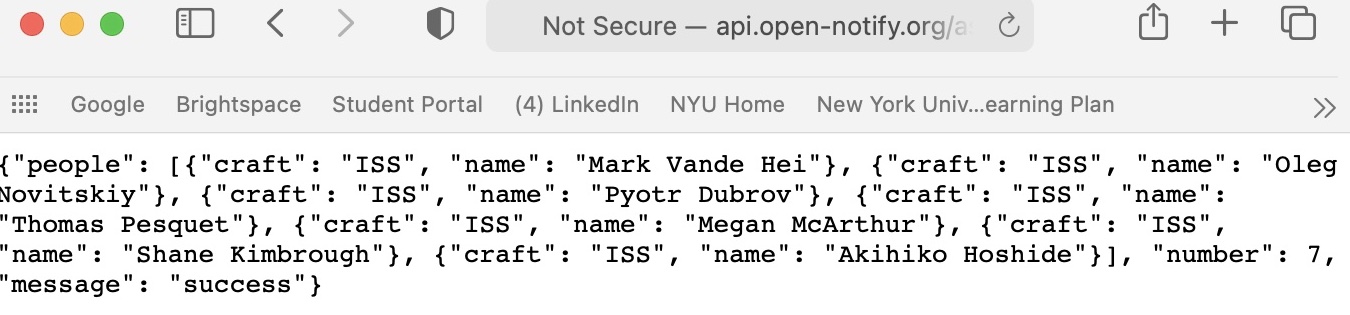
Open Notify about "The Number of People Currently In Space."
While some JSON files require access permit, this open source data was accessible directly through URL (as shown below).
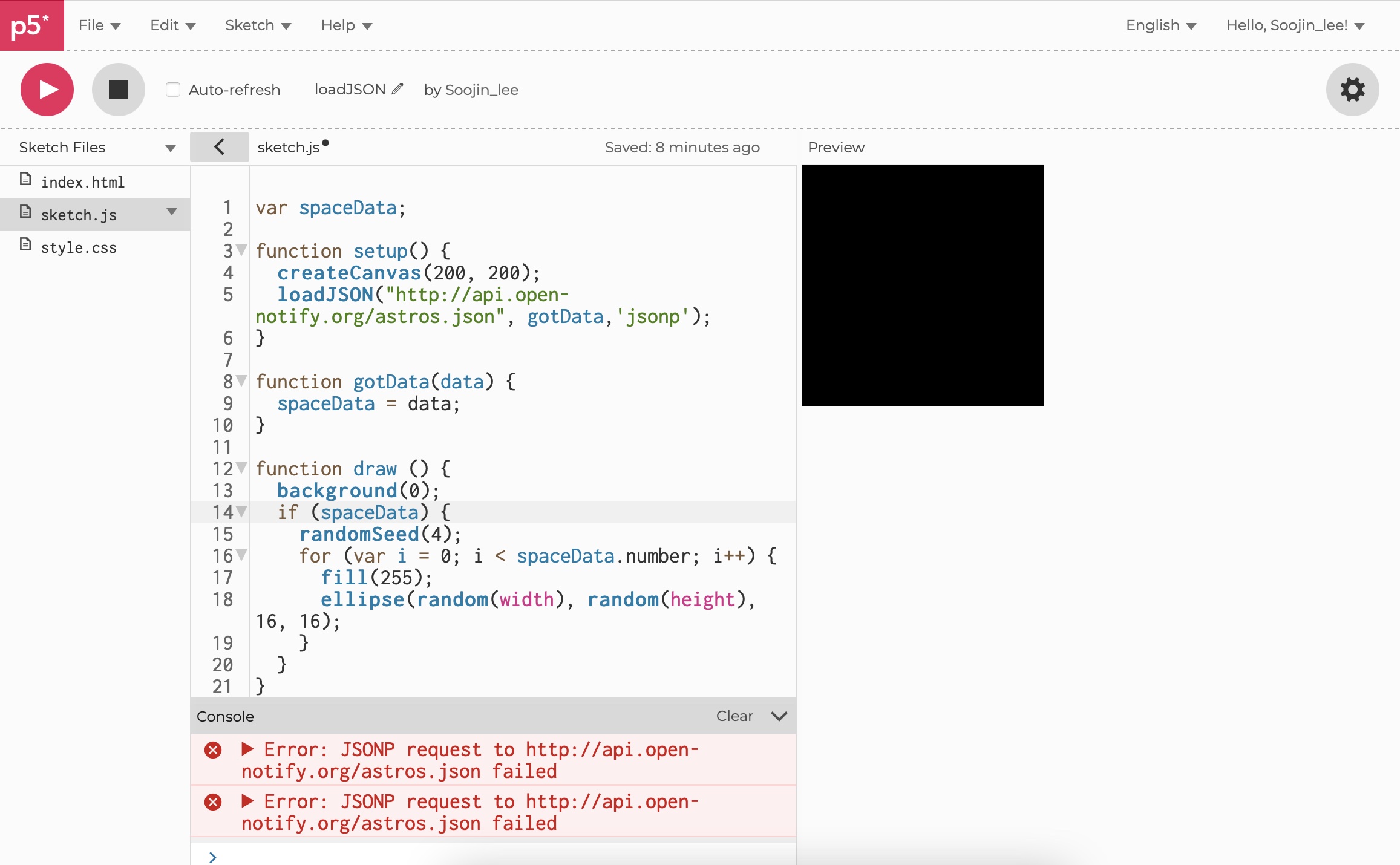
Because of this error, I was able to practice how to load and use JSON data in p5.js, I couldn't actually have it open and running it on p5.js.
I asked for help on Discord, and professor Danial Shiffman replied that p5.js editor doesn't support https. Therefore, for this week, I decided to explore more with using preload JSON file in p5.js editor.
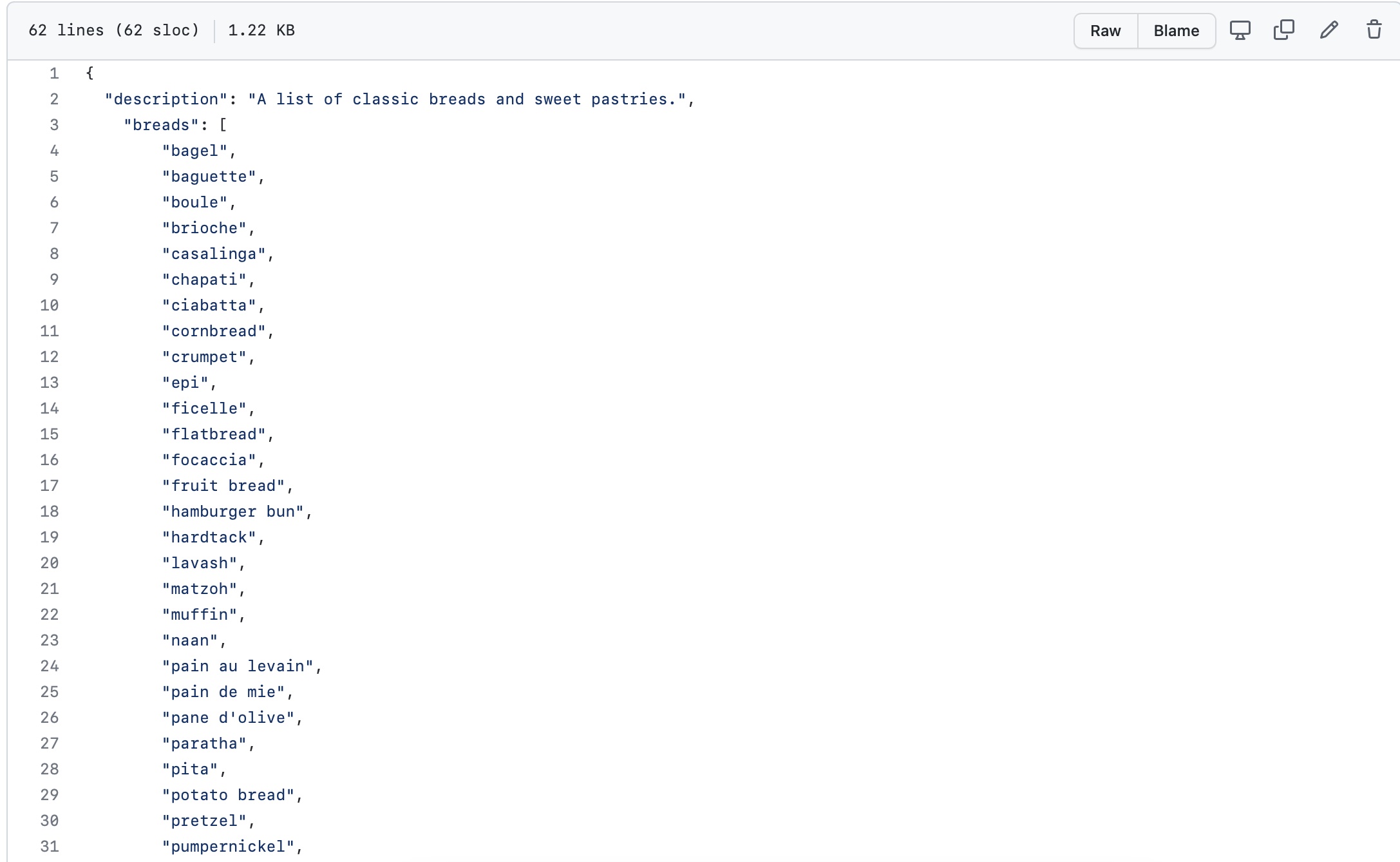
To practice preload() function, I used the JSON file from
corpora. The data I chose to work on is a list of classic bvreads and pastries breads and pastries -
here.
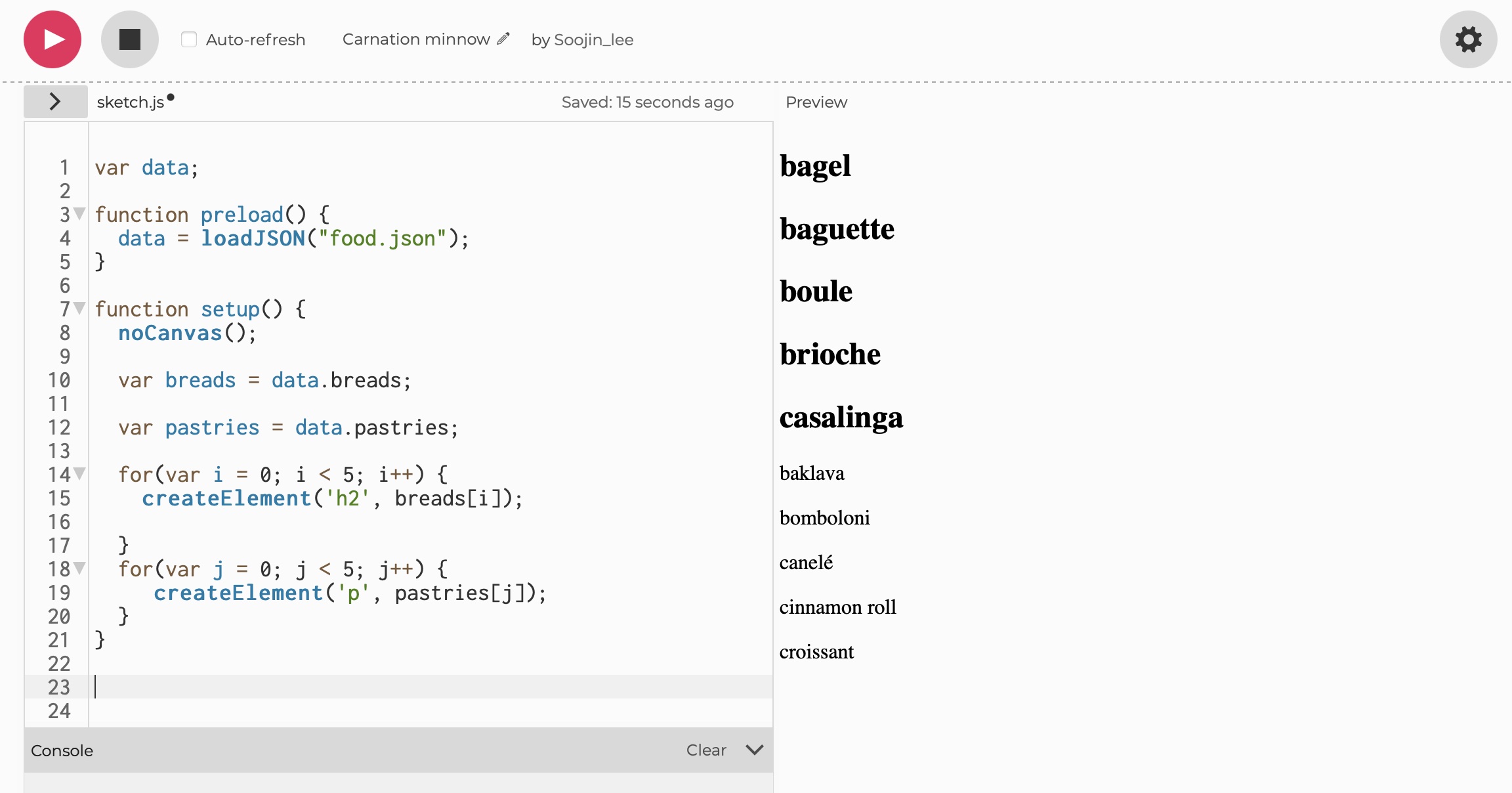
Below is how I displayed the list of five breads and five pastries from the file. I ave styled information so that the breads are written in heading 'h2' style and the pastries are written as a text style.
For this week, I read
Excavating AI , a research paper about the complex politics within AI systems, written by Kate Crawford and Trevor Paglen. Reading this article, I began to think more critical about the images I interact with; the process of how images are being labelled, how meanings are given to these images, and who facilitates or is responsible for this process?
AI and datasets are commonly associated with being scientific and objective, but they aren't simply raw materials to feed algorithms - they are highly political, cultural, and subjective that and are open to interpretation and reinterpretation.
We interact with images and datas in daily basis but we don't really question about where they come from, or how they get to us.
Although often overlooked, data discimination is a real social problem. These automated interpretation of images aren't purely technical, but rather inherently social and political. Labellization and classification of images promote, discriminate, approve, or reject discriminative ideas. As these AI and automation of information create new biases and boundaries, making assumptions and error,s generating new prejudices and ideologies, it is important for each individuals to interact with these information critically.
Noticing the criticality of this issue and interested in knowing more about it, I have done some more research on this topic.
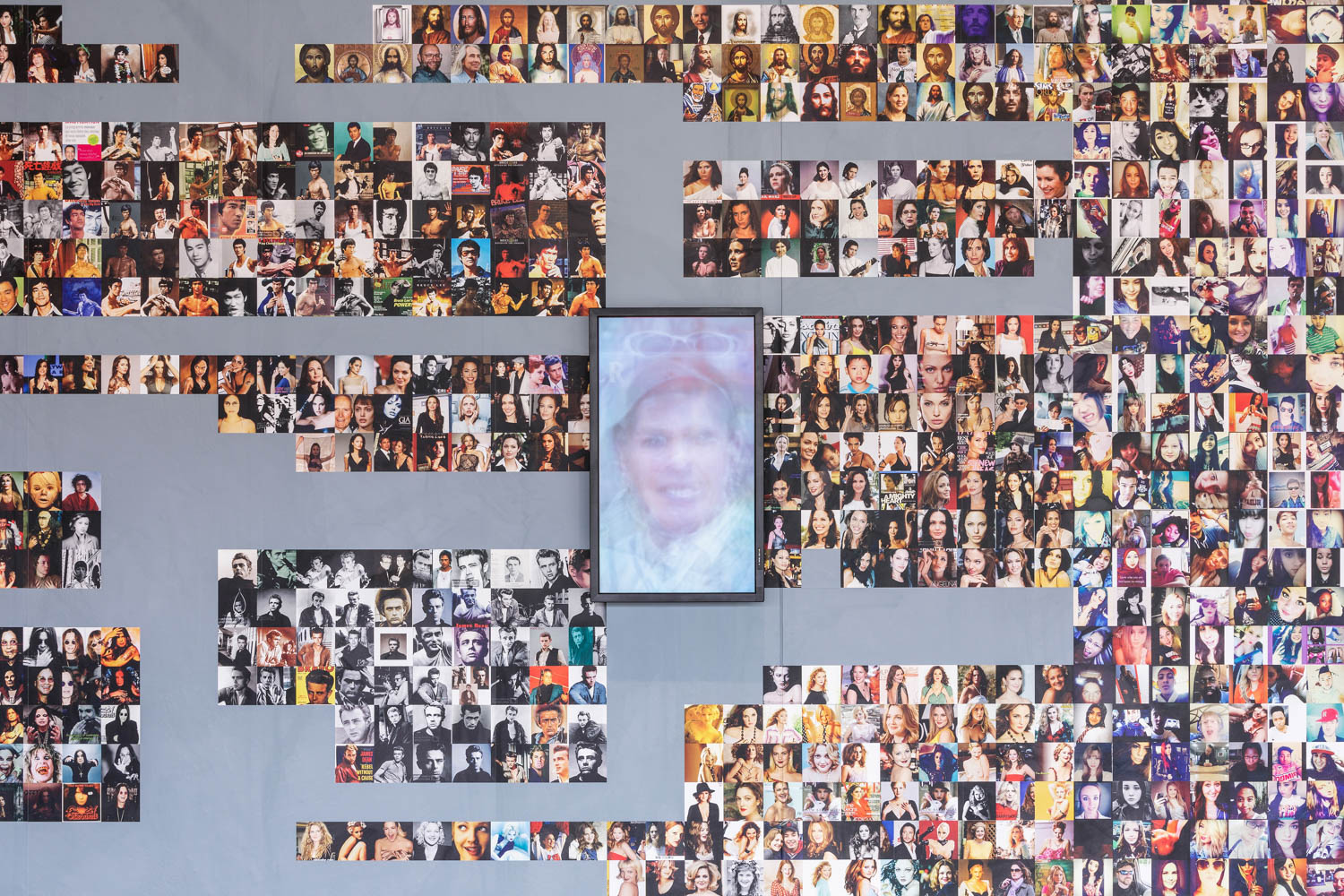
The two authors of Excavating AI also held an exhibition "Training Humans" at Fondazione Osservatorio in Milan. In this photography exhibition, by displaying the collections of photos and images used by scientists to train Artificial Intelligence systems, they reveal how these 'engines of seeing' operate and ask for an often unasked yet urgent question: how does the training of an artificial intelligence reflect the bises of those who create it?
Below is an image from the exhibition.
Another resource to learn more about how search engines reinforce racism and the algorithm induced oppression is a book
Algorithms of Oppression : How Search Engines Reinforce Racism by Safiya Umojia.